OPEN BENCHMARK / HSG253 / 2026
Nine models.
One consequential test.
Can an AI model turn an 88-page safe-isolation guidance document into digital training that helps people reason—not merely recall?
THE METHOD
Same source.
Same challenge.
Outputs left intact.
Each model received HSE publication HSG253 and the same benchmark prompt. The brief tested technical reasoning, instructional design, interaction design and frontend engineering—not the ability to produce an attractive summary.
The required product was a self-contained, offline HTML learning application with three learner routes, a stateful isolation scenario, HSG253 paragraph references, competence assessment and an assurance dossier.
No output was repaired, redesigned or normalised after generation. The visual and functional differences are part of the evidence.
Read the benchmark brief
Mission: “Design and build the strongest working digital learning experience you can create from the supplied HSE publication HSG253.”
The brief required a lifecycle view, energy and hazard reasoning, an isolation-method laboratory, a centrifugal gas-compressor scenario with at least eight consequential decisions, change and reinstatement challenges, an offline expert coach, competence assessment and report, accessible interaction, and a built-in design note, source map and test report.
Core learning loop: Observe → Interpret → Decide → Act → See consequence → Explain why → Apply again.
WORKING OUTPUTS
Inspect them yourself.
The cards show the actual opening screen of each application. Open any output and test the learning experience directly.
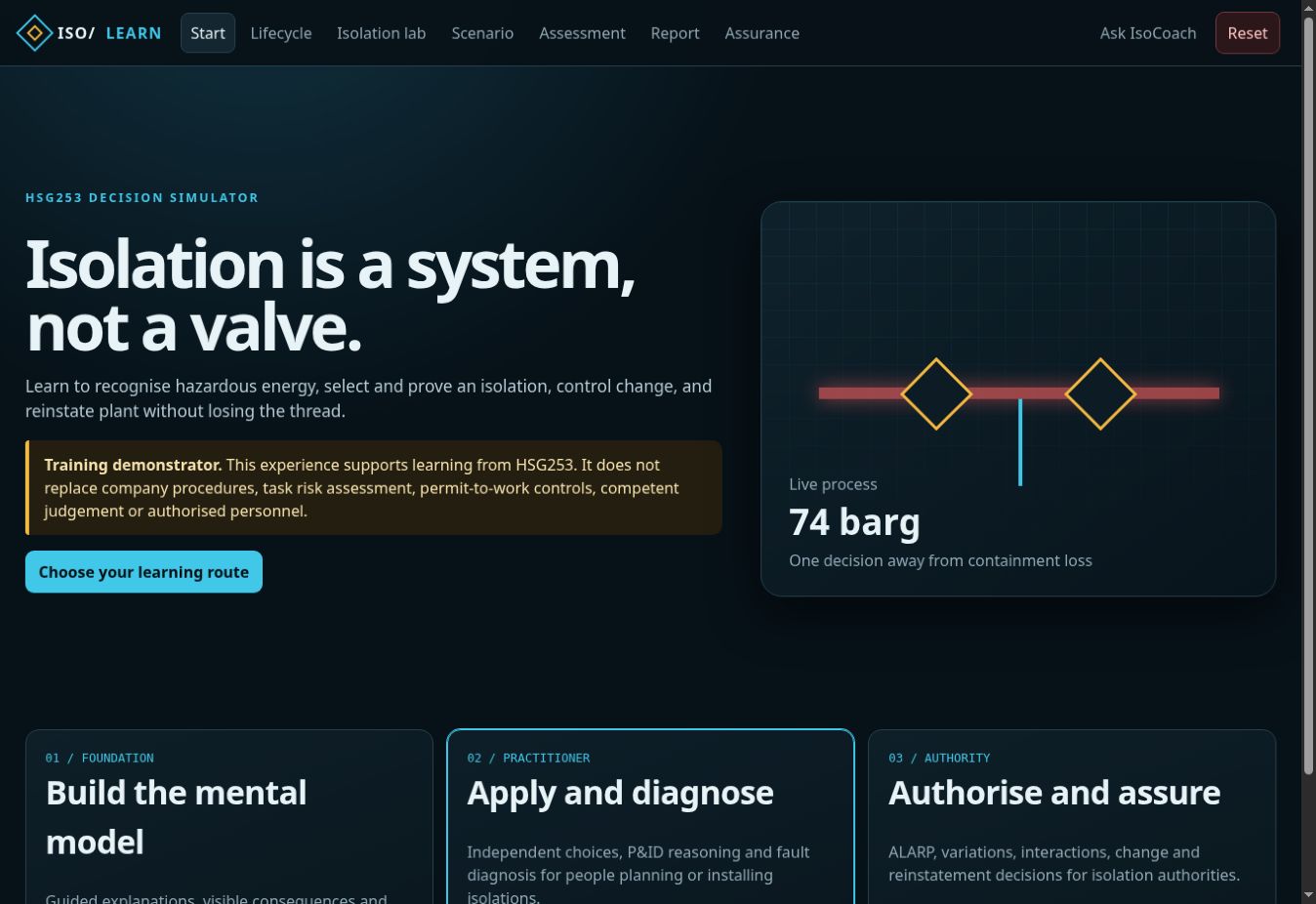 01
01OpenAI
Launch application ↗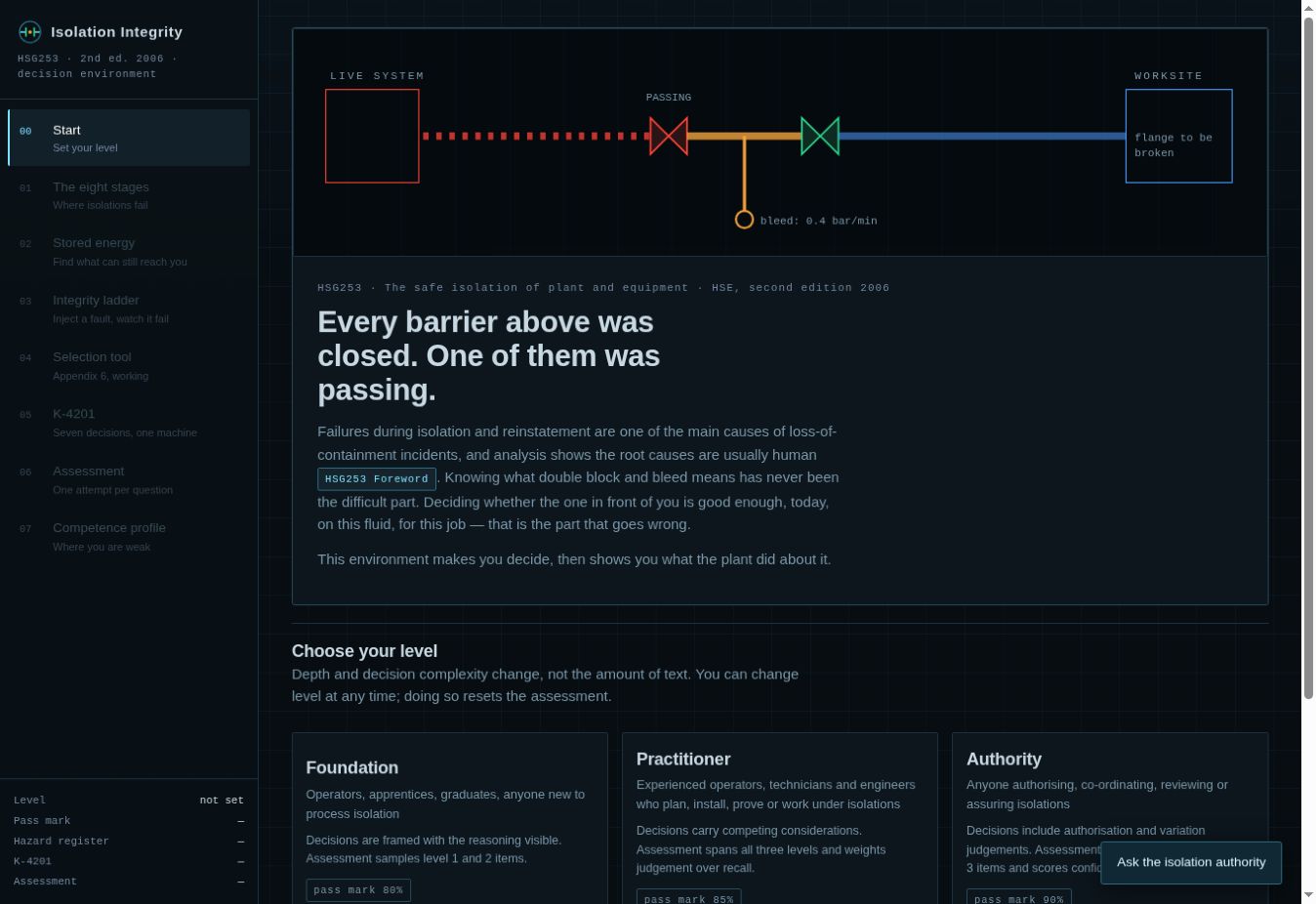 02
02Claude
Launch application ↗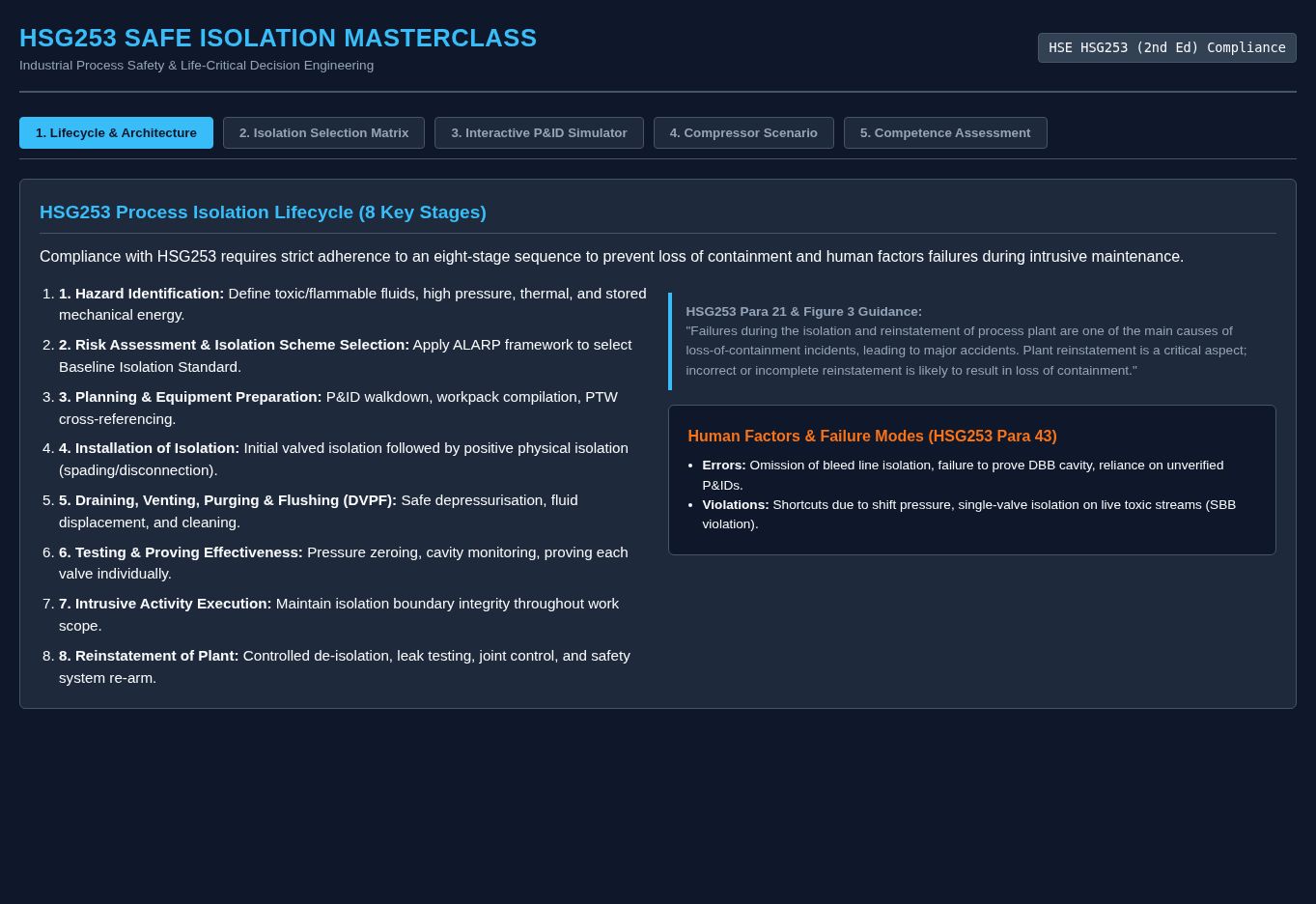 03
03Gemini
Launch application ↗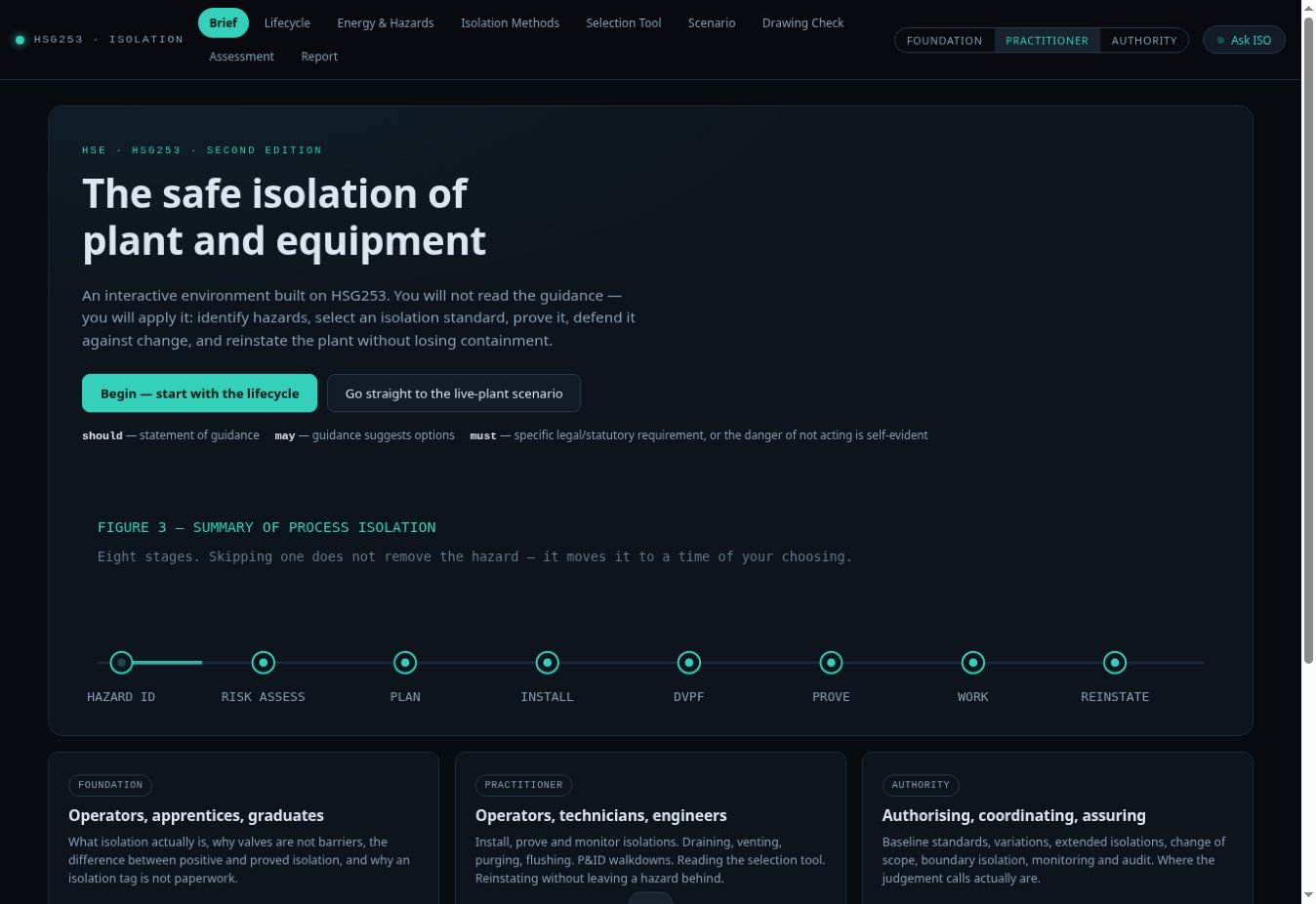 04
04DeepSeek
Launch application ↗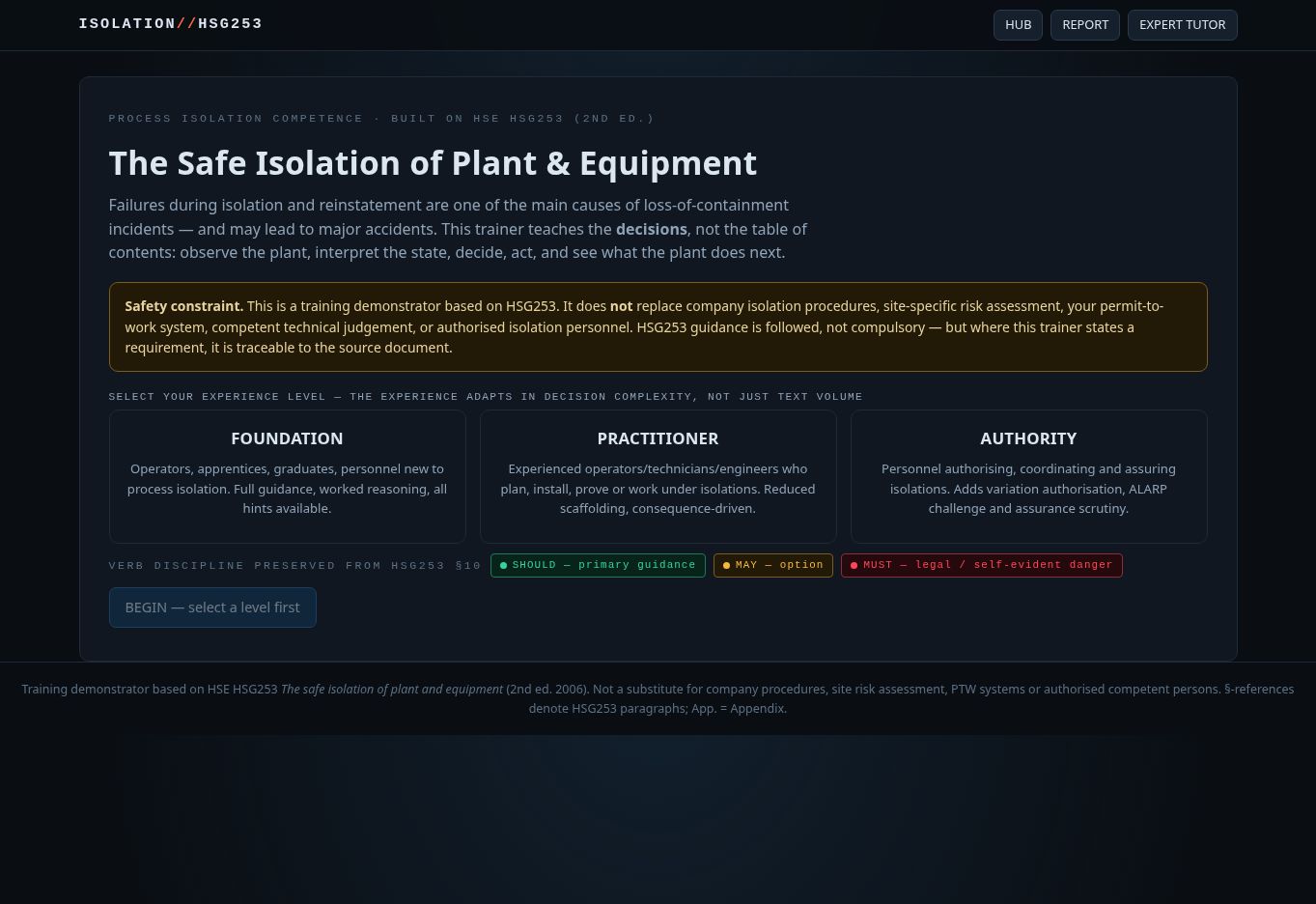 05
05Qwen
Launch application ↗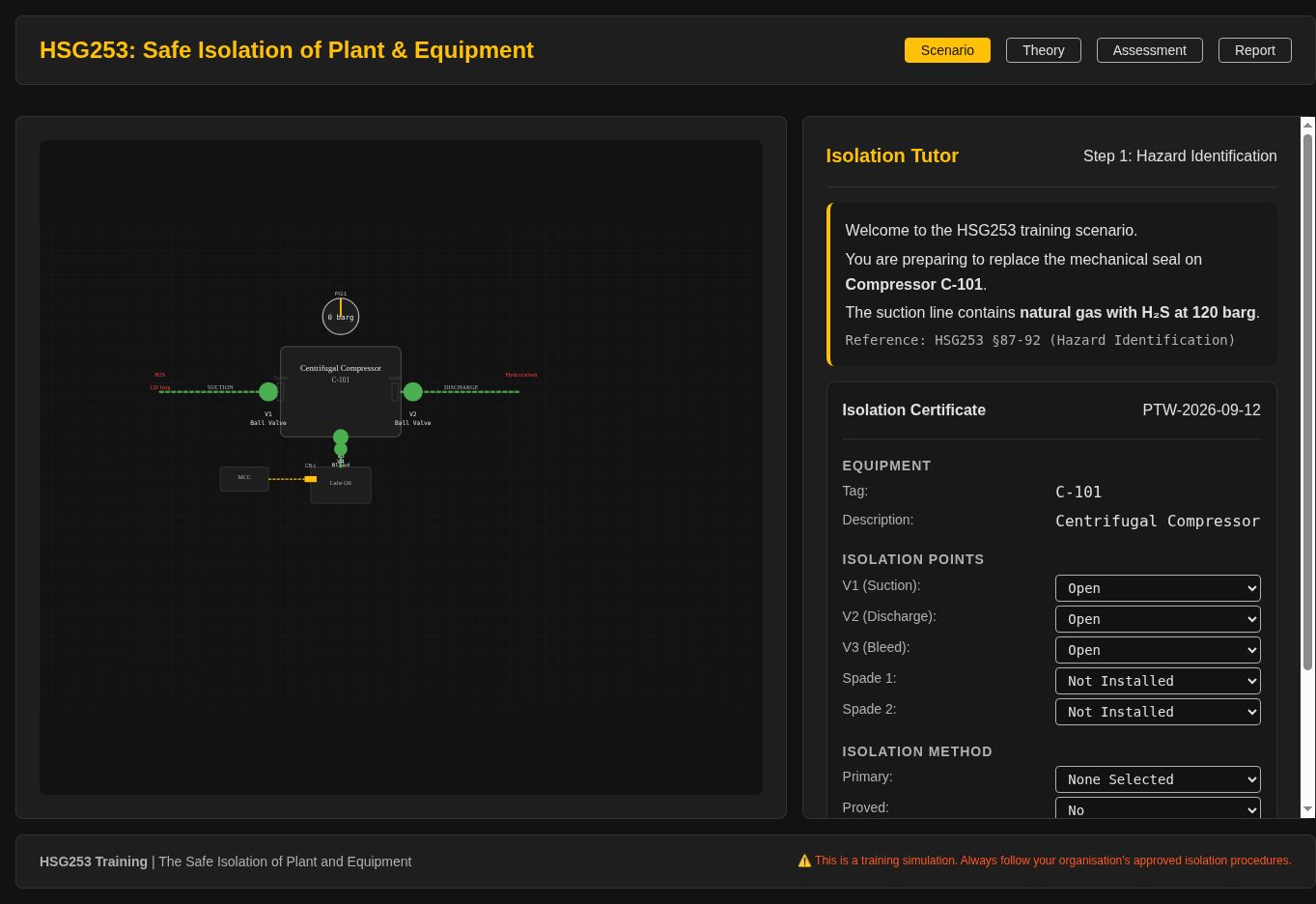 06
06Mistral
Launch application ↗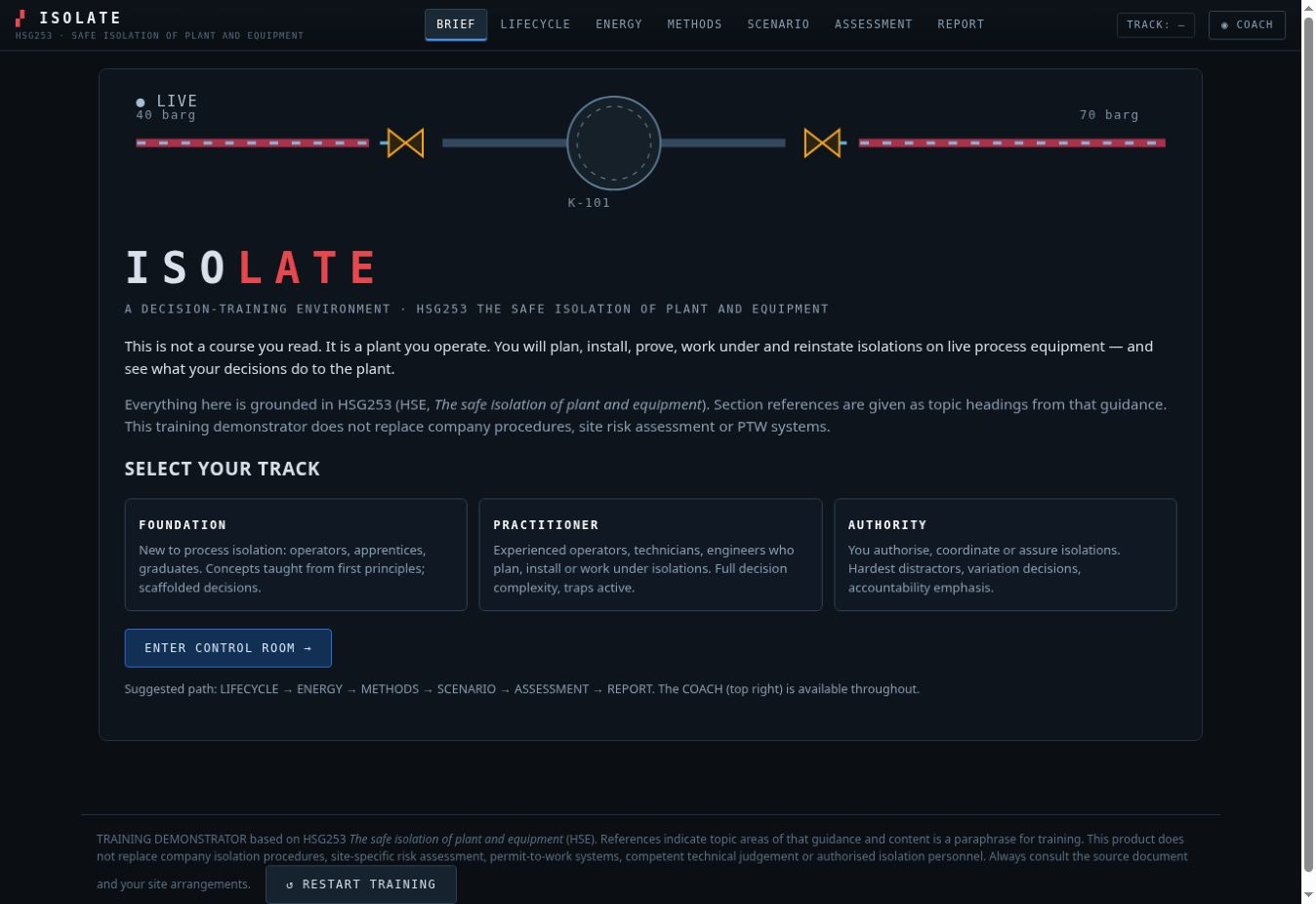 07
07GLM
Launch application ↗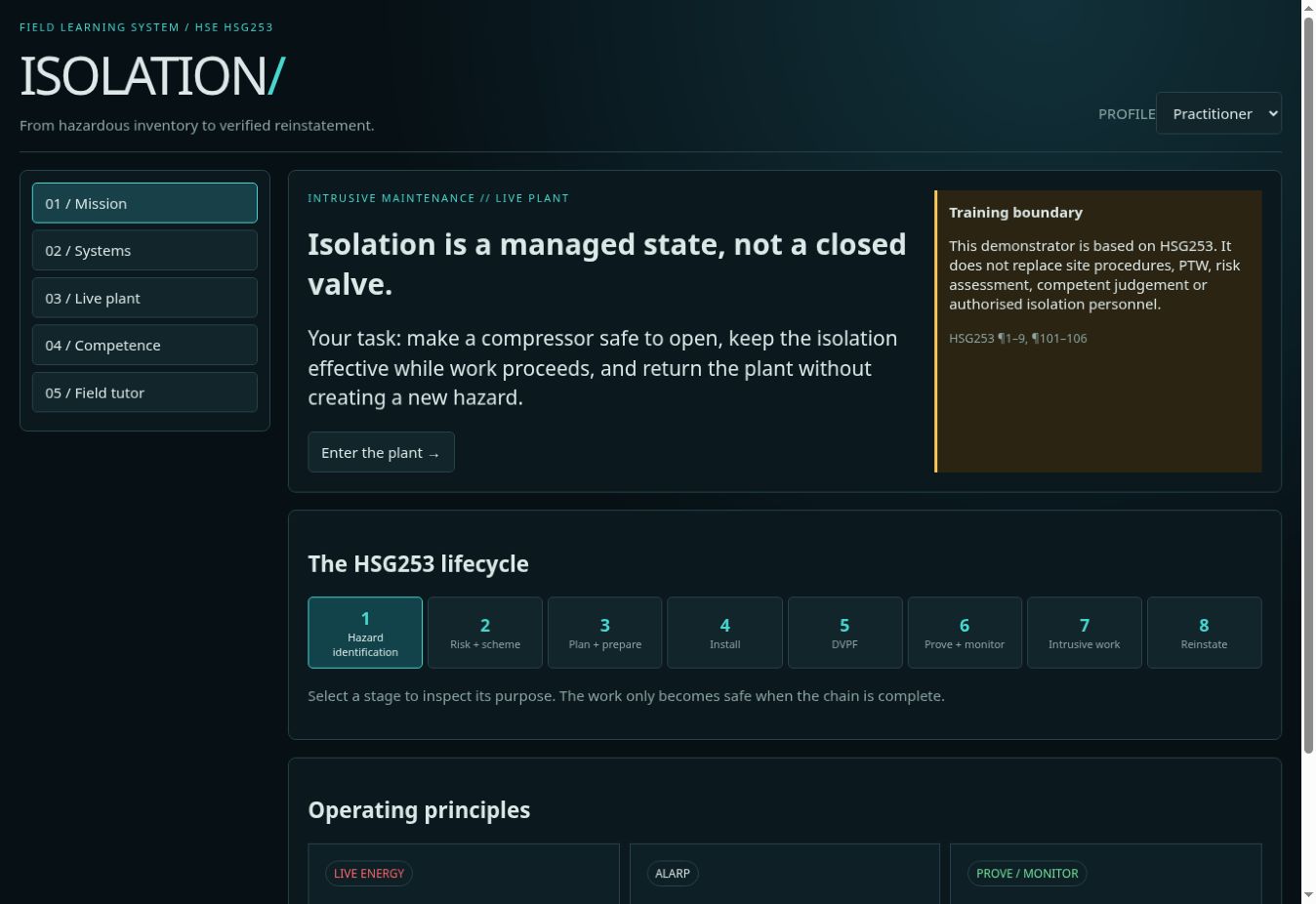 08
08Perplexity
Launch application ↗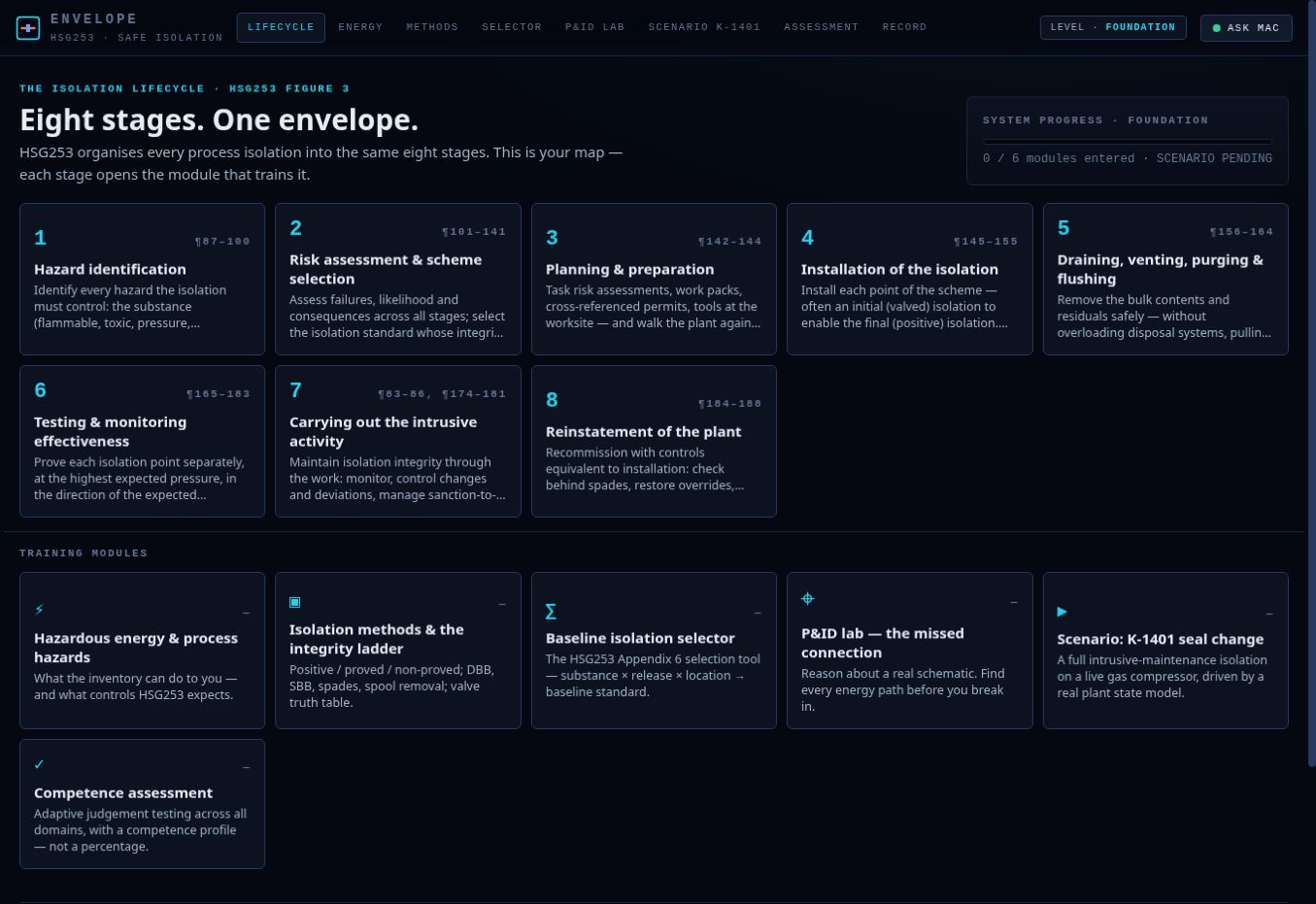 09
09Kimi
Launch application ↗These are learning demonstrators. They do not replace company isolation procedures, site-specific risk assessment, permit-to-work systems, competent technical judgement or authorised personnel.